New ATF guidance ends federal registration for NFA items, but gun owners in some states are still not in the clear.
The Bureau of Alcohol, Tobacco, Firearms and Explosives (ATF) has issued an open letter and new guidance that gun owners have waited 90 years to read.
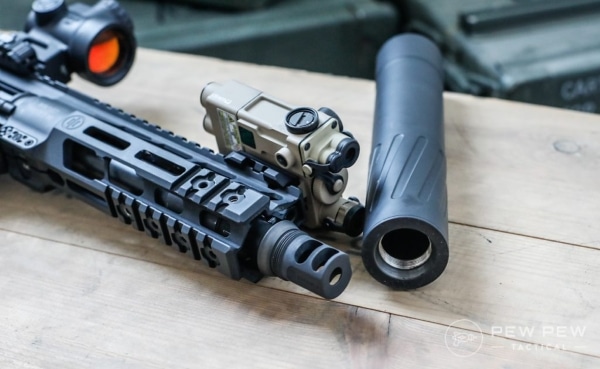
Effective October 9, ATF will no longer require approval or registration under the National Firearms Act (NFA) to make or transfer suppressors, short-barreled rifles, short-barreled shotguns, and “any other weapons.”
That means no more waiting weeks or even months for a tax stamp, and no mandatory federal registry for these items.
The guidance follows a federal court ruling in Texas earlier this year. That court found that once Congress cut the NFA tax on these items from $200 to $0, the government could no longer rely on its taxing power to justify the registration system.
The court’s order only applied to a limited group of people. But the Justice Department chose not to appeal, and the deadline to do so passed on October 5.
ATF then extended the same treatment to gun owners nationwide. The agency said protecting only some Americans would create “inequity and disuniformity.”
Under the new guidance, ATF will not enforce the NFA’s making, transfer, registration, or marking requirements for suppressors, short-barreled rifles, short-barreled shotguns, or “any other weapons.”
The agency will also stop enforcing the federal ban on transporting unregistered suppressors and “any other weapons” across state lines.
Registration is now voluntary. ATF will keep the federal NFA database and will continue to approve Forms 1 through 4 for anyone who chooses to register.
That voluntary option matters, because federal law is only half the picture.
ATF’s guidance does not change state law, and the agency has declined to say whether items held under the new policy count as lawful under state statutes.
Several states ban some or all of these items outright. Those bans remain in full effect.
Many other states allow these items only if they are lawfully registered under the NFA. In those states, registration may still be the only way to stay legal, even though the federal government no longer requires it.
Alaska is a clear example. State law makes possessing a suppressor or short-barreled rifle a felony unless it is held under federal NFA registration. Alaska’s acting Attorney General has asked lawmakers to clarify the law, and the Legislature does not return until January.
Alaska is not alone. Roughly 15 states have laws that tie lawful possession to federal registration in some way.
Gun owners should check their state and local laws before they buy, build, or travel with any of these items.
Some federal rules also remain in place. Machine guns and destructive devices are still fully regulated under the NFA.
Dealers must still complete a Form 4473, run a background check unless an exemption applies, and keep federal records.
Short-barreled rifles and shotguns are also covered by a separate Gun Control Act provision. Owners must still file a Form 20 before taking them across state lines, and dealers cannot sell them until ATF creates a new approval process.
Finally, the policy is not permanent. ATF’s own guidance notes that Congress could restore a tax, a court could overturn the ruling, or a future Justice Department could reverse course.
Items removed from the registry also cannot simply be put back. Re-registration would require the Attorney General to declare an amnesty, which is not guaranteed.
What one administration does with a pen, the next can undo with a pen.
For now, gun owners in free states can own a suppressor, short-barreled rifle, or short-barreled shotgun without asking federal permission. Making that freedom permanent will take action from Congress.
Gun owners in states that still enforce NFA-based laws shouldn’t be left behind. If you live in one of them, sign the petition urging your state to stop enforcing the NFA, too.
Read more at AmmoLand.